The Tower — Tarot Card Meaning
The Tower doesn't knock your life down. It names what was already cracked, and the fast fall costs less than the slow one.
✓ 60-day guarantee — if the Map tells you nothing of your own, full refund
The Map of the Draw
Three cards, drawn for your question. Read whole, by name. Turned into a plan with real dates. 24 pages. Yours to keep.
A private tarot reading: $60–120 · the Map at opening: $19
drawn one at a time — the bruxo reads each question alone, start to finish
You came through the cards' door — so the Map opens on your question first.
Get my Map — $13.40Secure checkout by ClickBank — card or PayPal. Your Map lands in your inbox within 24 hours.
Not medical or professional advice. For personal reflection and wellbeing. The cards are presented as declared tradition — a mirror, never a verdict or a prediction.
This is how a Map of the Draw is born
These are pages from a Map already drawn — someone else's question, with his name on it. Yours will speak of you: your cards, your plan, your ninety days.
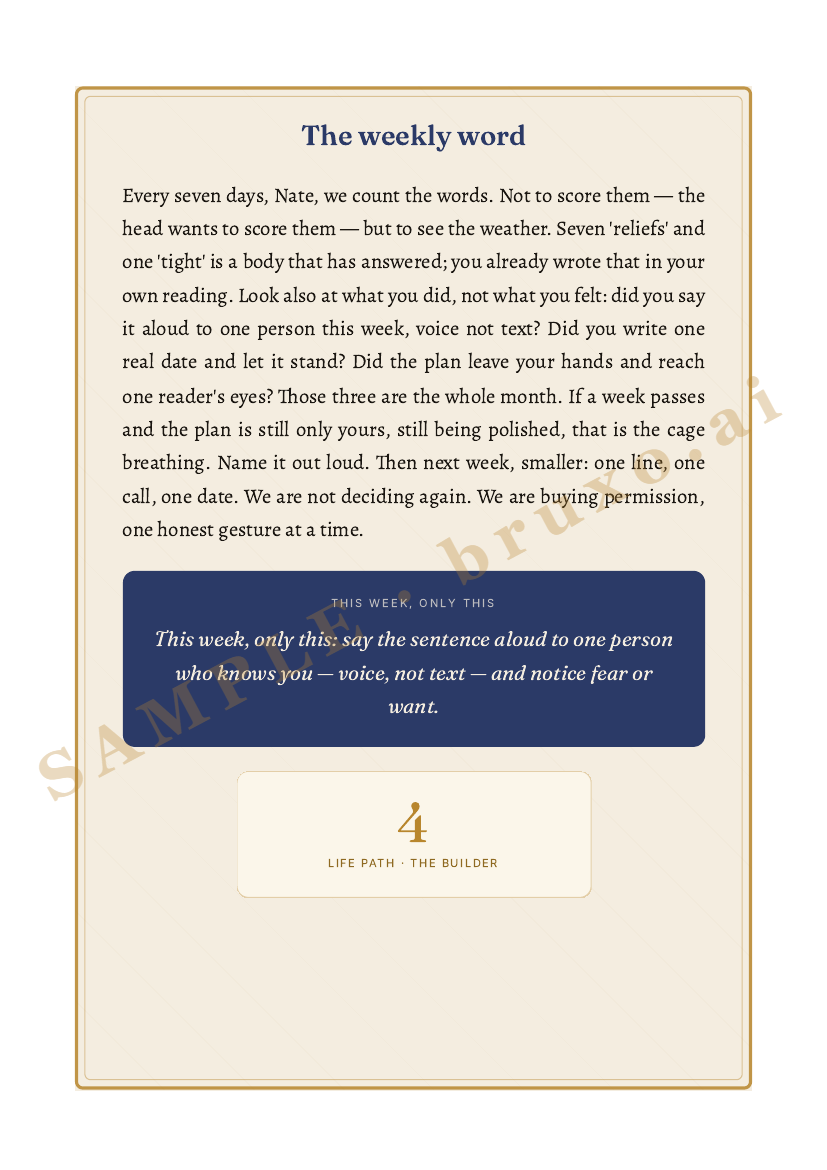 24 pages — yours will speak of you
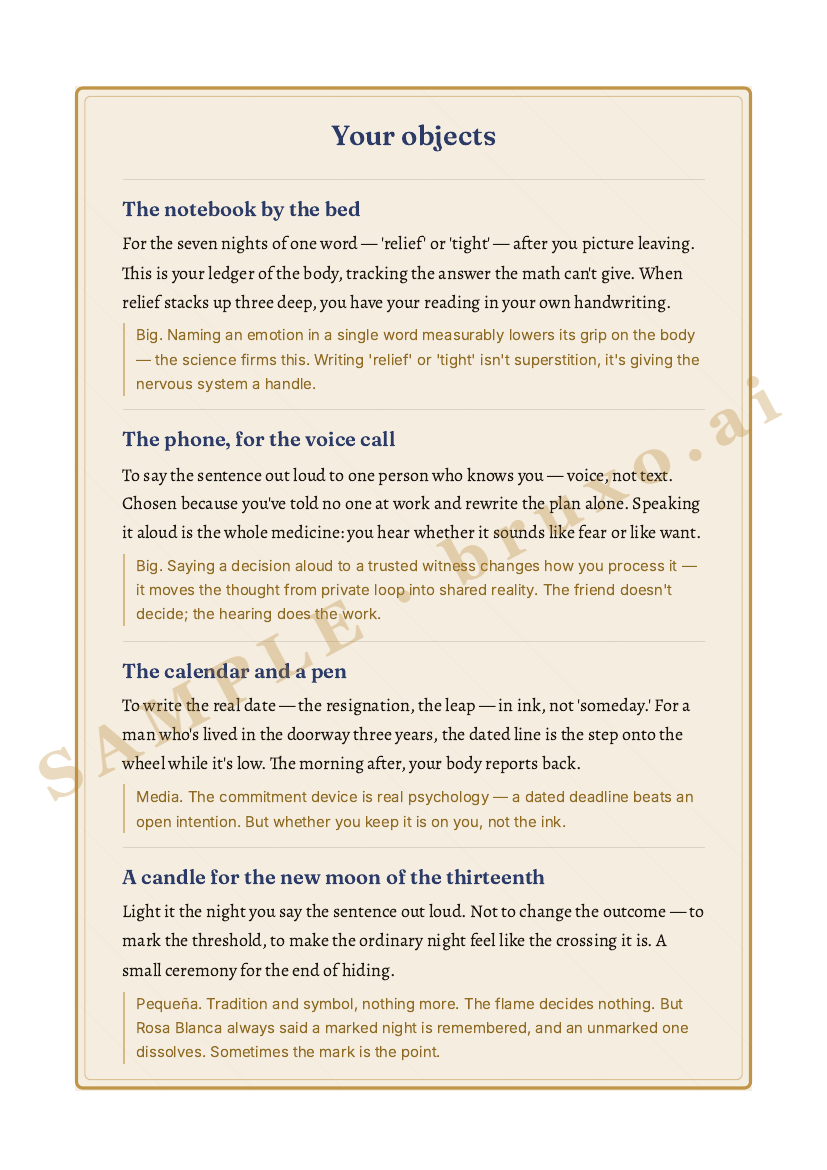 24 pages — yours will speak of you
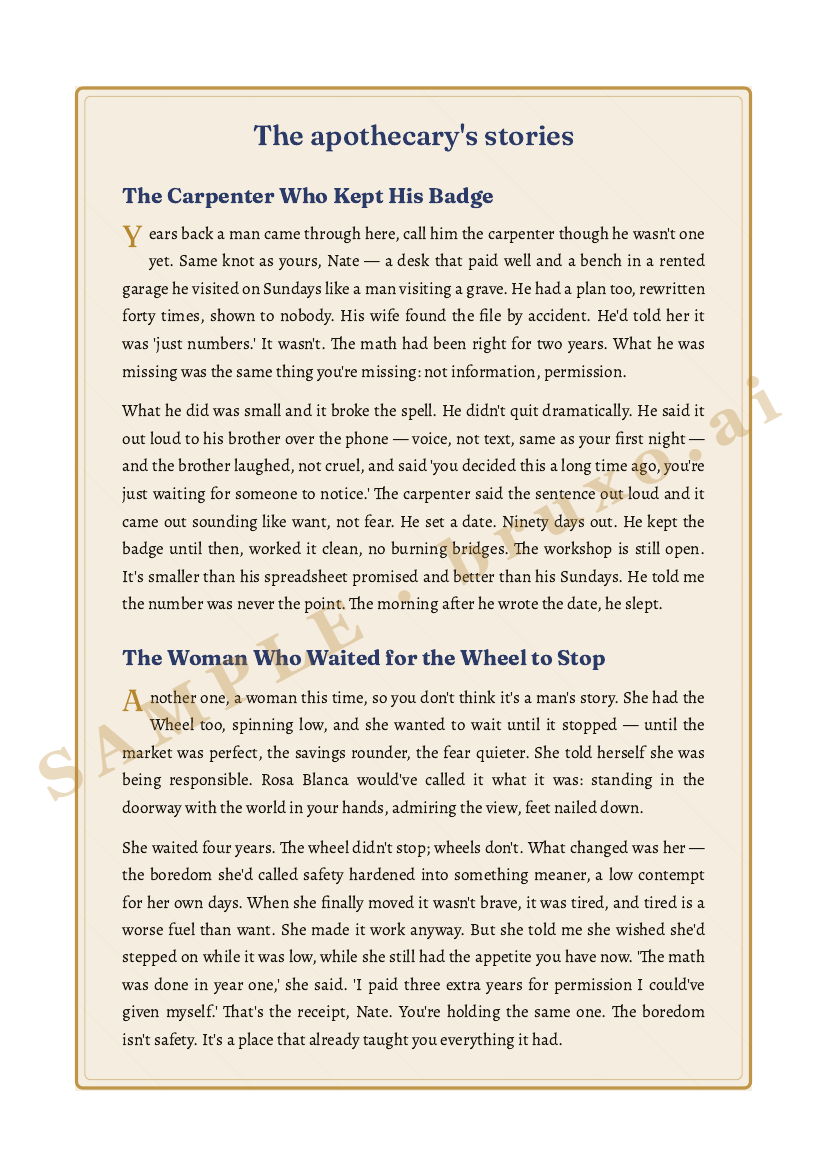 24 pages — yours will speak of you
Tap the first seven to look closer. The rest stay veiled: they belong to whoever ordered them.
The Tower upright: what this card really says
Upright, the Tower talks about a structure that no longer stands on its own. Not failure — front. Something built tall and fast, with no root. Then one bolt of truth hits it, and down it comes.
Here is the part fear skips: the Tower is fast, and fast is mercy. The things that fall slowly are the ones that eat years — the marriage that dies for a decade, the job that rots for six. When the Tower lands, the ten-year collapse takes a month. It hurts more per day and much less in total. After the dust, you find out how much strength you were spending just to keep the thing up.
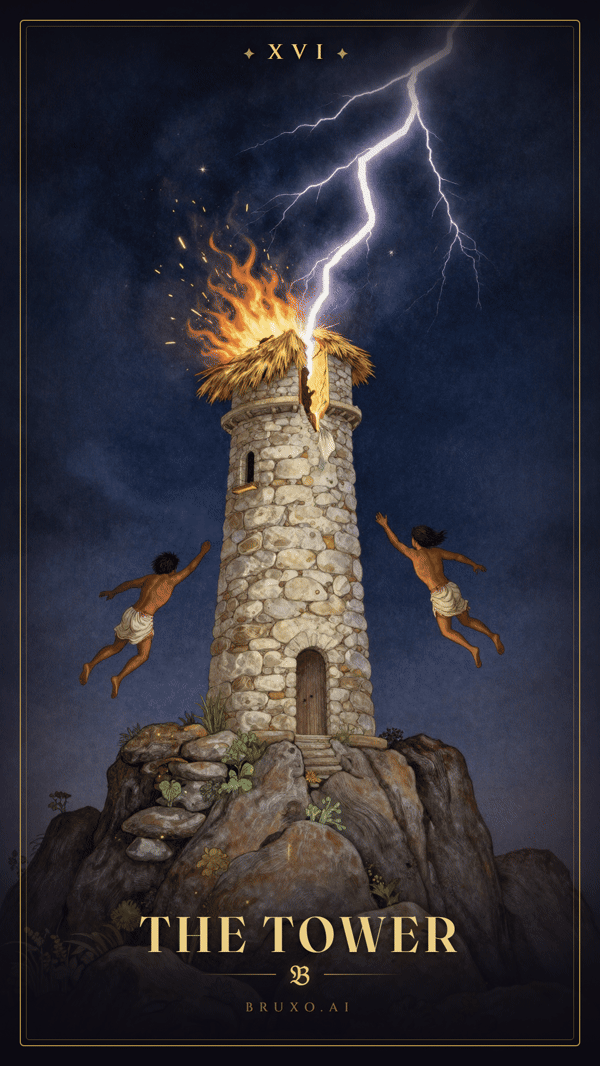
Look at the picture. The tower loses its crown, not its base. What falls is what you stacked on top — the title, the image, the story you told about yourself. The stone underneath stays. You rebuild from there.
The Tower reversed: the fall held in the air
Reversed, the card shows a fall you keep postponing. You saw the crack. You put a beam under it. Now you are paying rent on a ruin — with money, with sleep, with silence. The reversed Tower is not kinder than the upright one. It is slower, and slow is the expensive way down.
Sometimes it points at the other habit too: blowing things up on purpose. There are people who tear down their own house every two years and call it courage. That is not the Tower. A true Tower is not chosen; it happens to you. If your hand is on the dynamite, that is impatience wearing a costume.
The reversed card asks one plain question: what are you holding up that no longer wants to stand?
The Tower in love
In love, the Tower rarely means cheating. It means front. The couple that works in photos and not in the kitchen. The two people who stopped really talking a year ago and call that peace. When this card lands on a love question, a truth is about to be said — by you or by the other — and after it, there is no going back to the old arrangement.
That is not the same as the end. It is the end of the act. Plenty of couples cross a Tower and come out more alive, because what fell was the silent deal to pretend. The useful question is not "will we break up." It is: what have we not been saying, and for how long?
The Tower in work and money
At work, the Tower marks the floor you don't trust but keep standing on. The job you would have left already if it weren't for fear. The client who pays late and costs you your weekends. The plan that only holds because you never look straight at the numbers.
With money, this card is not a prophecy of ruin, and I won't sell it as one. It is an invitation to audit. Write down what you are propping up: the loan, the deal, the little business that runs on your patience. One of those lines is already falling — slowly, with you paying the maintenance. The Tower's job is to bring that bill early, while it is still small.
For the real numbers, bring a real accountant. The card just points.
When the Tower keeps appearing
When the Tower keeps showing up, don't read it as the sky insisting. Read it as you insisting. A card repeats because your eye returns to it, and your eye returns to what your chest has not settled. Somewhere in your life there is one specific thing you already know will not hold. You keep pulling cards hoping one of them will say it for you.
Try this instead. Take paper. Write: what am I holding up with effort? One thing, the first that comes. Then: if it fell tomorrow, through no fault of mine, what is my first feeling? Write the raw word — relief, panic, shame. That word knows more than the deck does.
How I read this card at my table
At my table, I do one thing with the Tower before any meaning. I put the card down, I stay quiet, and I watch the person's face. The face answers first. Somebody sees the broken tower and a kitchen appears in their head, or an office, or a name. That first picture is the reading; everything I say after is just company.
My grandmother Rosa Blanca used to say a roof that leans is already talking. So I don't ask "what will fall." I ask: what did you see just now, before you thought? Then we make a list of what stays standing after the fall — people, hands, trade, roof over your head. That list is almost always longer than the fear says. That is the whole trick I own.
One more thing, said straight: if what is falling is your sleep, your food, or your wish to be here, no card is the right reading and I am not the right company. See a mental health professional. The Tower speaks of structures. It has never spoken of you.
An open, loaded image works like a screen. The one who looks fills it with their own material — fears, wants, the thing that has no name yet. Psychologists have studied this for a long time; they call it projection, the same principle behind the old inkblot tests. That is why a card can feel like it knows you. It doesn't. You know, and the picture gave you permission to say it out loud.
Legend, told as legend. The old decks say the bolt that strikes the tower is not anger from the sky — it is a hand clearing ground for what is true. Notice what the old image chooses: the tower loses its crown, not its foundation, and the two figures are not pushed. They fall outward, into open air. The old ones say the fall is the first free thing those two ever did. Pretty story. I pass it on because it is old, not because it is proof.
Questions that reach the apothecary
Is the Tower a bad card?
What does the Tower mean in love?
What does the Tower reversed mean?
So now you know what The Tower breaks: only what was already cracked — and why the tradition calls it a rescue in disguise.
But one card is a mirror; the draw is the conversation. Bringing your own question to the table — the full spread read around it, start to finish — is the Map of the Draw: 24 pages read on your question alone, yours for good.
The card has spoken. The conversation is still waiting.
Open my Map — $13.40Secure checkout by ClickBank · 60-day guarantee · no rush: the apothecary door doesn’t close.