Folk Sleep Remedies That Actually Work (And the Ones We Love Anyway)
Grandma hit the gesture even when she missed the herb: same ritual, same hour, every night. That is the part that works.
Updated Jul 11, 2026
✓ 60-day guarantee — if the Map tells you nothing of your own, full refund
Which remedy runs in your blood?
Five playful questions. At the end: your heritage archetype, the verdict on YOUR remedy, and one gesture to make it stronger.
The Natal Map of the Body
It finds your weak hour — and why. It tells you what holds each season. 26 pages. Your name on every one.
Your grandmother did it by eye: she knew your hours, your temper, the way you switch off. The Map is the bruxo's version of that gaze — your chronotype, your hours, your remedies season by season, written down and yours forever. 26 pages.
An astrology + naturopathy consultation: $80–150 · the Map at opening: $19
forged one at a time — the bruxo writes each Map alone, start to finish
You came through the remedies door — so the Map opens on your nights first, herb by herb.
Get my Map — $13.40Secure checkout by ClickBank — card or PayPal. Your Map lands in your inbox within 24 hours.
Not medical advice. For personal reflection and well-being. Astrology is presented as declared tradition — never as science.
This is how a Map is born
These are pages from a Map already forged — someone else's, with their name on it. Yours will speak of you: your hours, your body, your seasons.
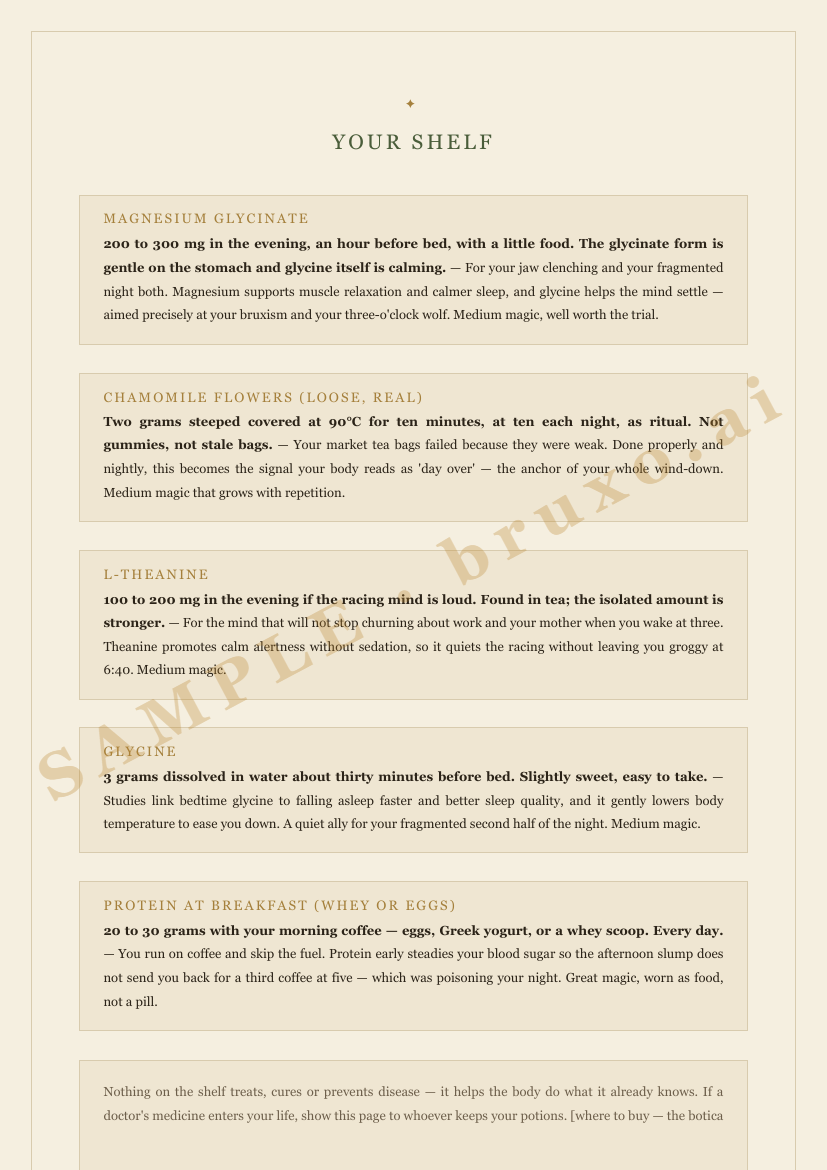 26 pages — yours will speak of you
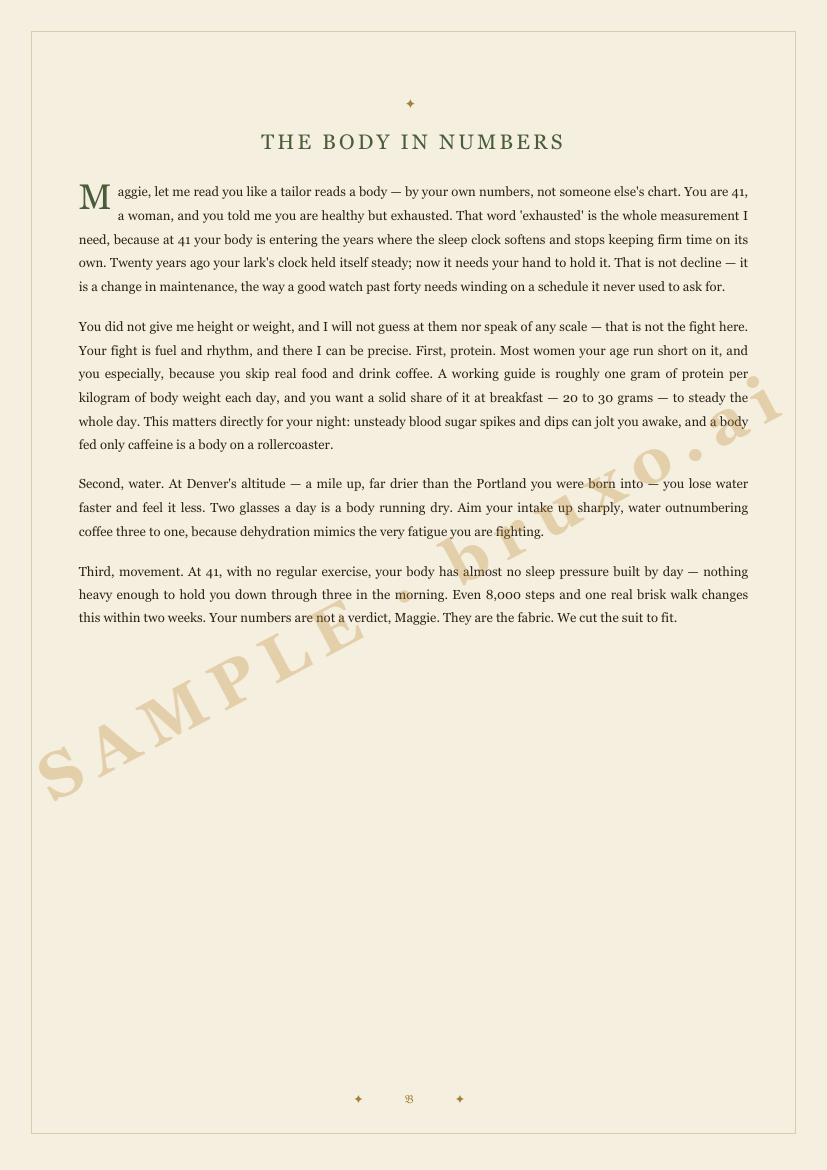 26 pages — yours will speak of you
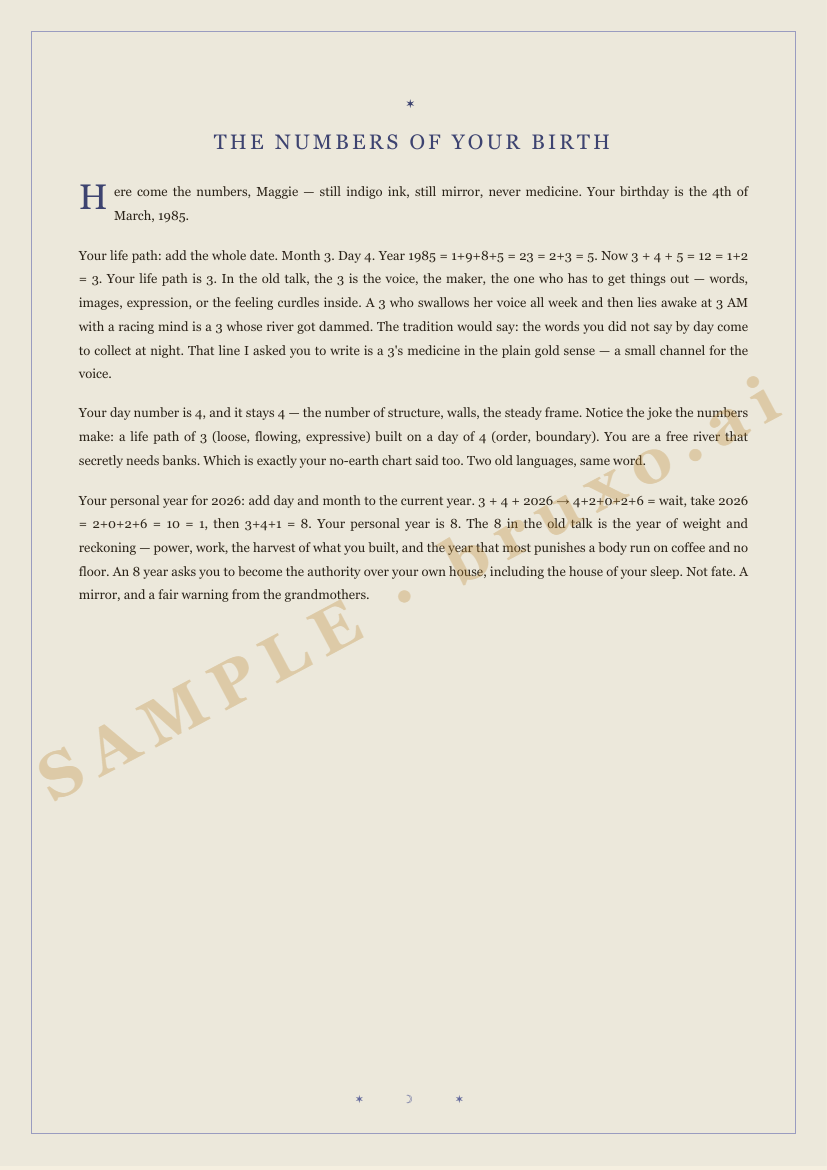 26 pages — yours will speak of you
Tap the first two to look closer. The rest stay veiled: they belong to whoever ordered them.
Straight answer first: of the folk remedies that run through our families, some have real studies behind them — chamomile has a meta-analysis in its favor, lavender scent increased deep sleep in the lab, and the sock trick (yes, the socks) has actual thermoregulation science: warm feet are the signal your body waits for before it lets you sleep. Others do nothing for the body but plenty for the night: warm milk, taken every evening at the same hour, becomes the cue that tells your brain the day is over. And a fixed pre-bed cue is one of the best-documented things in all of sleep research.
So the right question is not "does the folk remedy work?" It is "what, inside that remedy, is doing the work?" Sometimes it is the herb. Sometimes it is the warmth. Almost always it is also the ritual — the same gesture, in the same order, at the same hour. On this page we separate the two without belittling either: tradition is told in indigo, declared as legend; science goes in gold, with author and year.
And one thing this house never does: laugh at your grandmother. The woman who tucked your feet in and warmed your milk knew about schedules, warmth and presence long before anyone coined the phrase "sleep hygiene."
Fixed bedtime routines are linked to falling asleep faster and waking less at night — in a study of more than 10,000 families, the more nights per week with the same ritual, the better the sleep. (Mindell 2015, n>10,000)
Tradition says the night must be closed the way you close a house: one turn of the key for the door, one for the window, one for the heart. Whoever lies down without closing lets the day walk into the dream.
Admit it: 2 a.m., and you tried it "as a joke"
They taught you as a kid. You grew up, smiled, forgot. Then came that crooked week — and at two in the morning, sleepless and pride-less, you found yourself warming milk "just in case," or counting sheep like a desperate accountant. Did it work? Or was it just homesickness?
The honest answer: sometimes both — and the second one counts too. An inherited gesture carries two powers at once: the mechanism (when there is one) and the memory of being cared for. The body relaxes to both. This page shows you which is which, so you can use your family's remedy with intention — and, where possible, upgrade it with what science has confirmed.
The botica's cards: every remedy, its verdict
House rule: tradition is told in indigo, with respect. The verdict arrives as a seal: ✦ strong magic when science confirms the mechanism, ◍ medium magic when it confirms partly or indirectly, 〰 smoke when the ingredient does nothing — and notice that even smoke leaves this house unridiculed. Smoke served with love still keeps you warm.
Warm milk and honey
Milk warmed slowly, a spoonful of honey, drunk sitting in the kitchen with the small light on. "Finish it all — it will make you sleepy." And sleep, in fact, arrived.
The tryptophan in one glass of milk is far too little to sedate anyone: you would need many times the dose in a cup. The real engine is the package: warm drink, seated pause, same hour every night — a wind-down routine, and fixed routines have solid studies (Mindell 2015).
Counting sheep
One sheep, two sheep, three sheep over the fence — the oldest trick in the English-speaking night. Monotony as a lullaby: bore the mind until it gives up and sleeps.
We love the sheep, but Oxford tested them: people told to count sheep took LONGER to fall asleep than people who imagined a calm, pleasant scene — the counting is too boring, so the mind escapes back to its worries (Harvey & Payne 2002). The instinct behind it is right, though: occupy the racing mind with something monotonous. Just pick a sweeter monotony — a slow imagined landscape beats livestock arithmetic.
A lavender sachet under the pillow
A small cloth bag of dried lavender, sewn by hand, tucked under the pillow or between the sheets. Grandma's linens smelled of clean and of sleep at the same time.
Lavender scent in the bedroom increased deep (slow-wave) sleep in the lab, and participants woke feeling more rested (Goel 2005). Small studies, modest effect — but pointing the right way. And a fixed scent tied to the bed also works as a conditioned cue: nose smells lavender, body understands "we sleep now."
The nightcap
The small glass at the end of the evening — whiskey, brandy, sherry — poured "to help you sleep." In many houses it was the adults' ritual of affection: the small glass, the long evening, the stories.
Said with the love of someone who has shared that glass: alcohol does knock you out faster, yes — and then it hands you the bill. It fragments the second half of the night and cuts REM sleep (Ebrahim 2013, review). Grandpa's nightcap was a warm goodnight, not a sleep aid. Keep it as a goodnight, not as therapy.
Grandma's chamomile
Picked in summer, dried upside down, kept in a glass jar. "Two flowers, no more — or it turns bitter." Grandma's chamomile never came in a teabag: it came with the story of where it grew.
Here grandma takes the point: a meta-analysis of clinical trials finds chamomile improves reported sleep quality (Hieu 2019, meta-analysis). A gentle effect, not a drug — but real. Plus the bonus of the warm evening ritual on top.
The sock trick
"Put your socks on, you'll sleep better" — the least glamorous advice ever given, dispensed by grandmothers on every continent while tucking the blanket under your feet.
This is the crown jewel of folk wisdom: warming your feet opens the blood vessels in the skin (distal vasodilation), which lets your core heat escape — and that small drop in core temperature is the very signal that triggers sleep. Warm feet predicted falling asleep faster in a classic Nature paper (Kräuchi 1999, Nature), and a small trial found sock-wearers fell asleep sooner and woke less during the night (Ko & Lee 2018). Grandma and her socks beat half the sleep-gadget industry.
Reading a boring book
The thick, dull book kept by the bed on purpose — dictionary, legal history, someone else's memoirs. "Three pages of that one and you're gone," the house used to say.
No trial has randomized dull books, but the mechanics are sound and borrowed from proven pieces: reading occupies the racing mind with low-stakes content (the same principle that made calm imagery beat sheep — Harvey & Payne 2002), it happens in dim light away from screens, and done nightly it becomes a wind-down cue (Mindell 2015). Paper beats phone here by a mile.
My grandmother Zulmira, a healer from the Brazilian backlands, had a remedy I never found in any book: she would dip her finger in the water glass on the nightstand and draw a little cross on the sole of MY foot, saying "now sleep knows where to find you." I was out in a minute. Today I know warm feet are the body's signal that sleep is coming — but that night, what switched me off was the certainty that someone was standing guard. Both things were true.— o bruxo, from the botica
Why the ritual works even when the ingredient doesn't
This is the part that makes peace between grandma and the laboratory. Inside almost every folk remedy, three mechanisms work in silence:
1. Circadian cue: the body loves predictability — the same gesture, in the same order, at the same hour becomes a marker that primes the sleep machinery (Mindell 2015). 2. Conditioning: after a few weeks, the brain links the gesture to the sleep that followed it — the mug of milk starts to TRIGGER relaxation, the way the smell of coffee triggers waking. 3. Expectation: expecting something to calm you already changes the state of your body — measurable, real, and nothing to be ashamed of. Medicine uses it in its favor every single day.
A gesture repeated with faith is a path the feet already know. Grandma did not know the names of the mechanisms — she knew the path.
That is why the "smoke" verdict is never a sneer in this house. Counting sheep does little for your neurochemistry; but if it was your grandfather's way of saying "I'll sit here until you sleep," it did plenty. The ingredient was the love. Love has documented effects on the body — it just doesn't fit in a capsule.
People arrive here embarrassed: "bruxo, I know it's silly, but I sleep better when I do it." I always answer the same way: if it works and does no harm, who am I to call it silly? My job is only to show you WHERE the engine is — in the herb, in the warmth, or in the gesture — so you use it with intention instead of out of habit. A remedy used with intention yields more. Zulmira used to say that too.— o bruxo, from the botica
When the remedy isn't enough (and this house sends you to a doctor)
A serious word in the middle of the warmth: folk remedies support rest — they do not treat illness. If poor sleep lasts more than three or four weeks, if it comes with loud snoring and pauses in breathing, with pain, or with a sadness that will not lift, the right gesture is to book an appointment. The wise grandmothers were the first to say it: "this one is not for me, it's for the doctor." This botica inherits the rule. And if you take daily medication, any new herb in quantity deserves a word with your doctor first.
This botica's credo
Two inks, never mixed: what is science goes in gold, with author and year linked; what is tradition goes in indigo, declared as legend — honored, but never sold as a study. Nothing here promises to cure or treat anything: we speak of supporting rest and knowing your own body. And astrology, when it enters this house, enters as a mirror for self-knowledge — never as science. For reflection and entertainment, always declared.
Questions that reach the botica
Do folk sleep remedies actually work?
Does warm milk really help you sleep?
Does a nightcap help you sleep?
Why do socks help you fall asleep?
From the same shelf
- Tea for sleep: the botica's 7 herbs, each with its verdict
- Waking up at 3 a.m.: what the body says (and what the legend says)
- Birth chart calculator: discover your hours
So now you know the old remedies — the teas, the warmth, the small rituals that put generations to sleep before pharmacies existed.
But a page like this can only speak in general — it describes the night, not yours. Which hours run strong in your own body, which remedy fits your constitution — that reading starts from your birth data, and it is the Map of the Body: 26 pages written on your chart alone, yours for good.
The night has been explained. Yours is still waiting to be read.
Open my Map — $13.40Secure checkout by ClickBank · 60-day guarantee · no rush: the apothecary door doesn’t close.